Adekemi Borode Catch the Ghost — App
✱ Case Study 01 · iOS App

Catch the Ghost

Designing a gamified focus experience that rewards productivity.

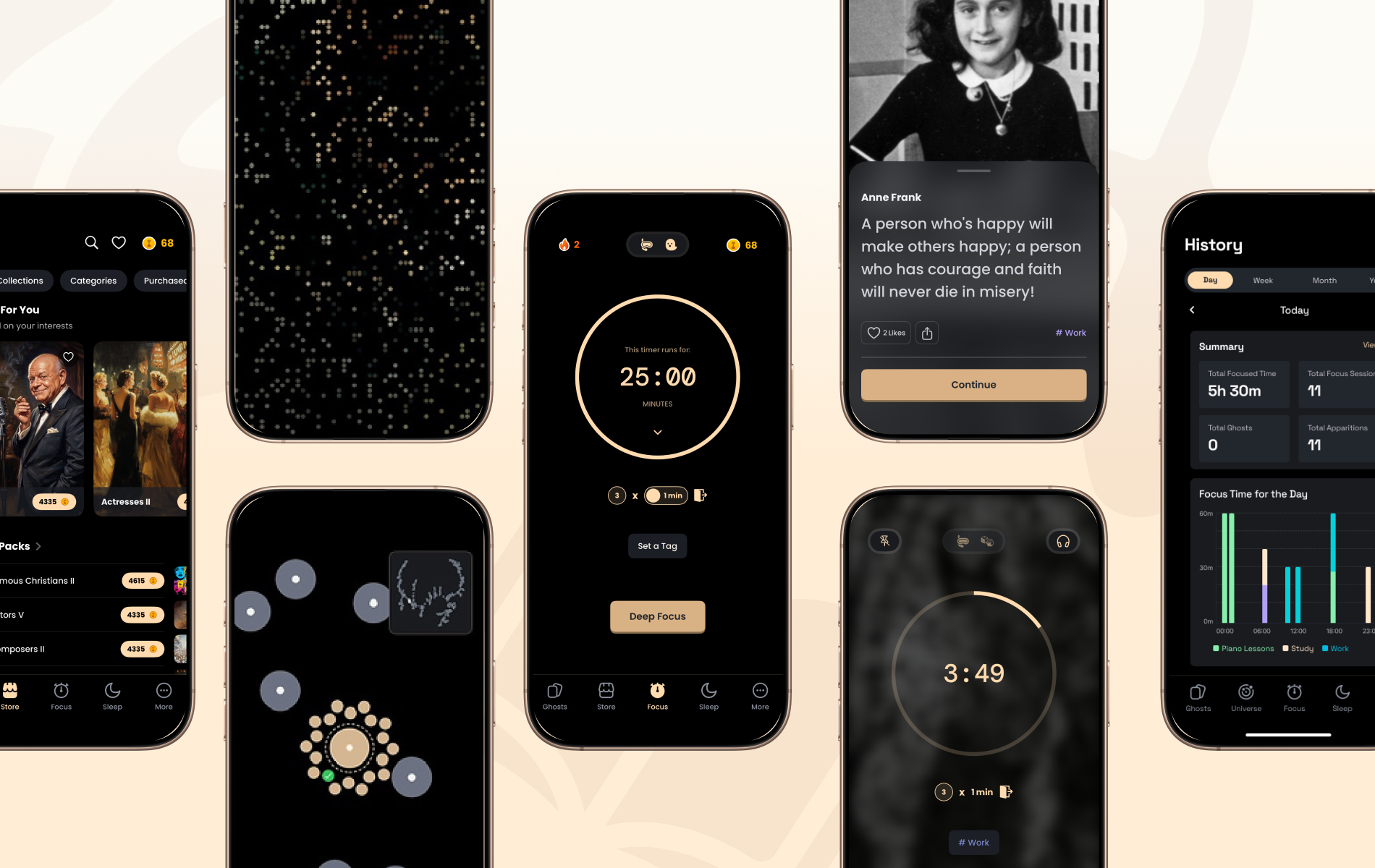
Catch the Ghost is a productivity app that combines focus timers, historical discovery, and game mechanics to make focus sessions more rewarding. Unlike traditional timers, it lets users uncover historical figures, collect rewards, build streaks, and progress through a larger ecosystem of content.

Role
Lead Product Designer
Team
2 Designers
Platform
iOS Mobile App
Status
Shipped
Rating
4.6 ★ · 92 ratings
Catch the Ghost — app screens

Most focus apps rely on discipline alone.

Most focus timer apps are straightforward — start a timer, wait for it to end, repeat. Reviewing competing products, I noticed that nearly all of them relied entirely on self-discipline. There was little excitement or anticipation attached to the focus experience itself.

"How might we make focus feel rewarding enough that users want to come back repeatedly — while keeping it simple enough to start without friction?"

A Ghost is a historical figure you reveal, apparition by apparition.

The foundation of Catch the Ghost is the process of catching a Ghost — a historical figure that users gradually reveal through focused work sessions. Each Ghost contains:

Historical information Multiple apparitions (images) Memorable quotes Connections to other figures

To fully catch a Ghost, users must reveal all of its apparitions through multiple focus sessions. This created a powerful reward system where every focus session contributed to a larger goal.

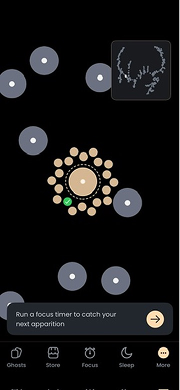
An apparition revealing pixel by pixel during a session

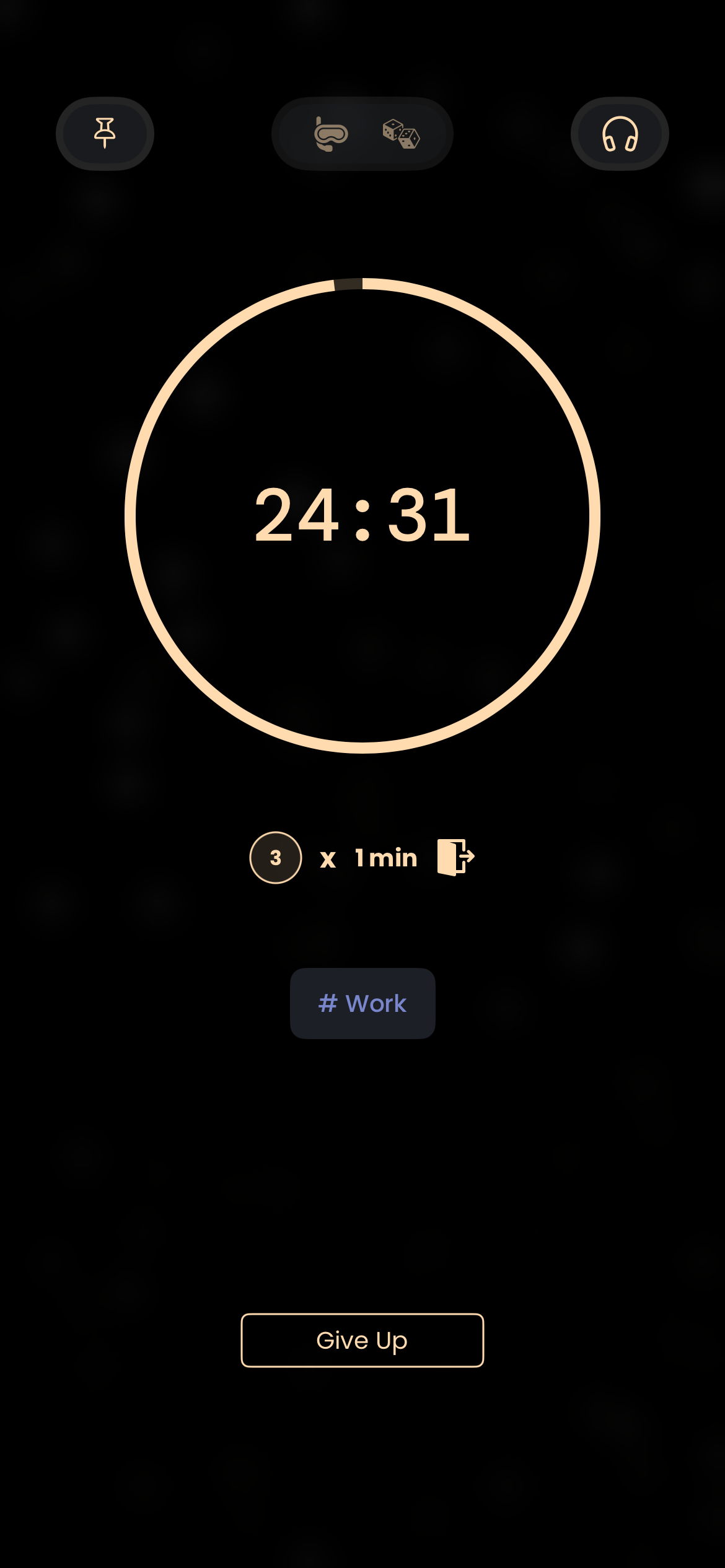
The apparition uncovers, pixel by pixel, as you stay with the task.

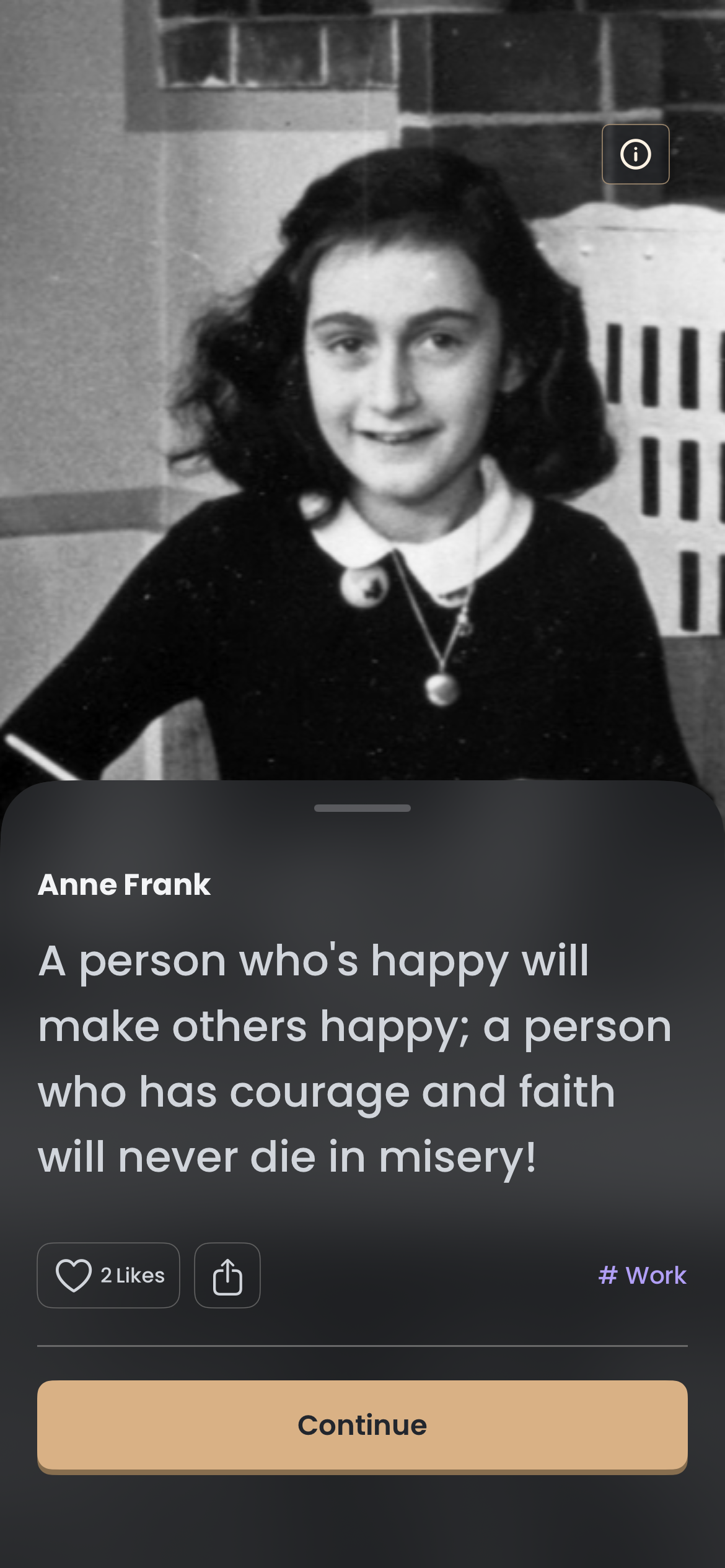
Ghost fully revealed with a quote at session end

At the end, the full figure and a quote — the emotional payoff.

Four friction points held the experience back

Through user feedback, stakeholder discussions, and internal reviews, four problems kept surfacing between people and a rewarding focus session. We worked on redesigning each one.

01
Too many steps to start
02
Limited content discovery
03
Rigid timer
04
Value locked behind a paywall

The first version had too many steps

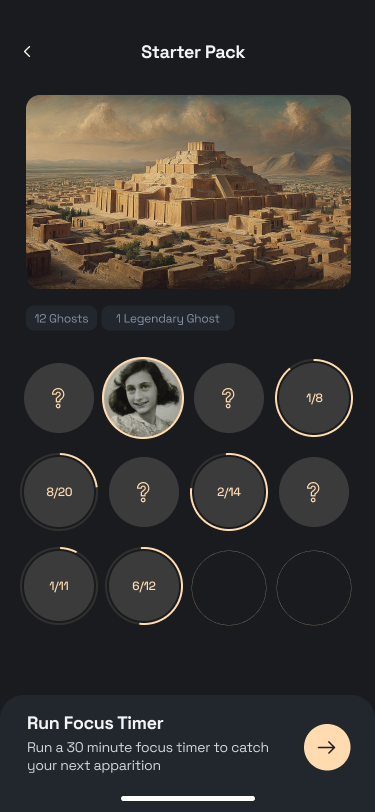
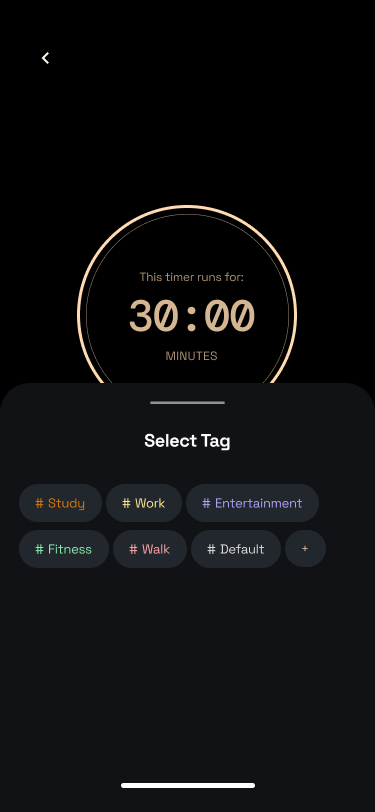
The first version followed a more traditional flow. Users would download the app, open a Starter Pack, select a Ghost, navigate to the timer screen, select a tag, and only then start a focus session.

Before — the original six-step flow
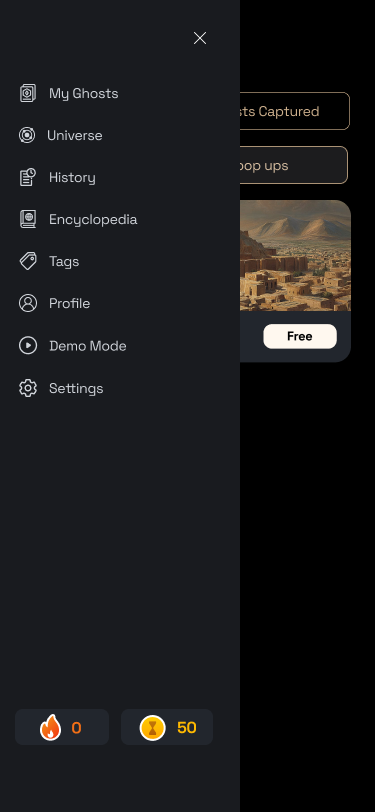
Dig through the menu
1 · Dig through menu
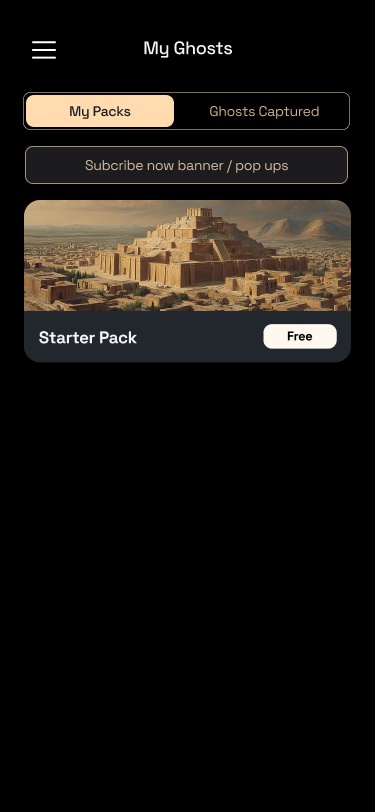
Open Starter Pack
2 · Open Starter Pack
Select a Ghost
3 · Select a Ghost
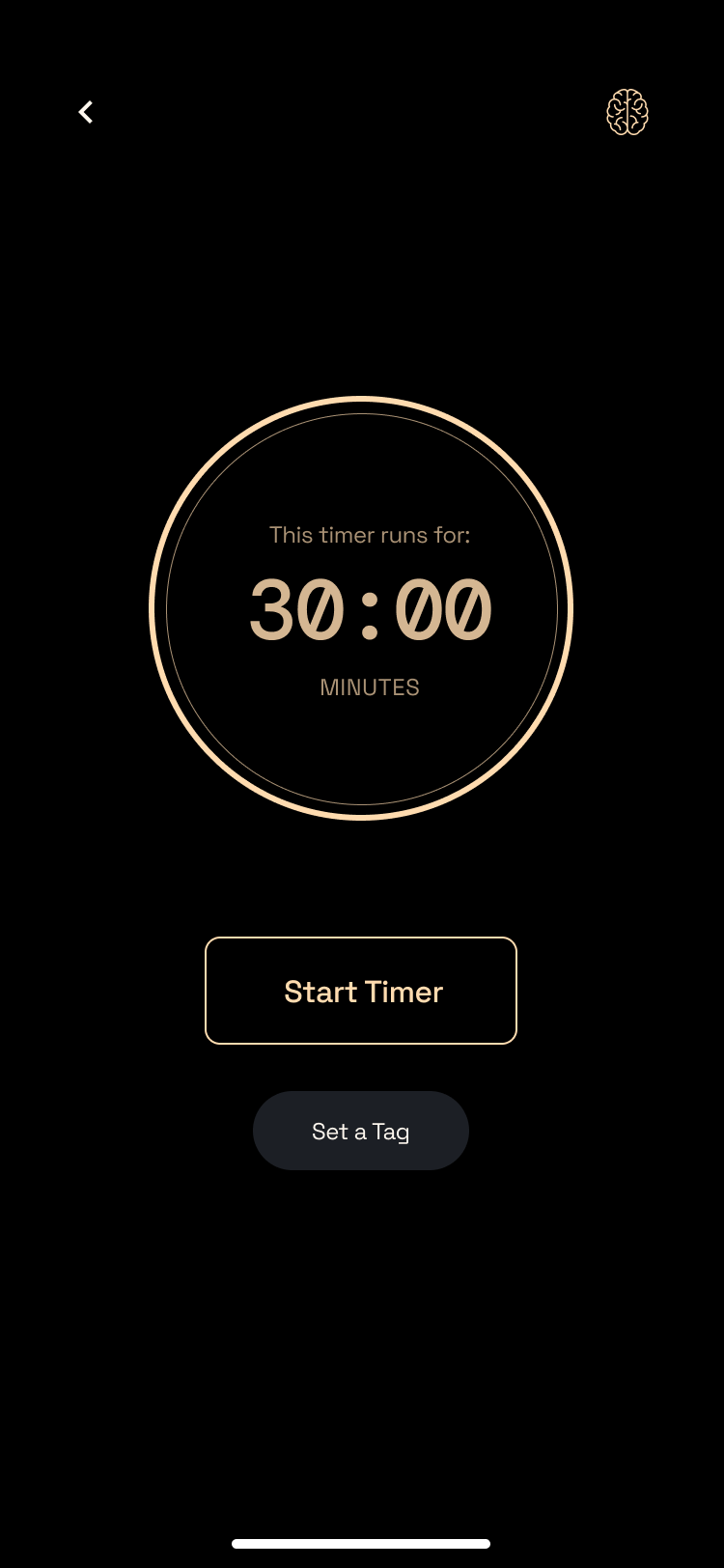
Navigate to the timer
4 · Find the timer
Select a tag
5 · Pick a tag
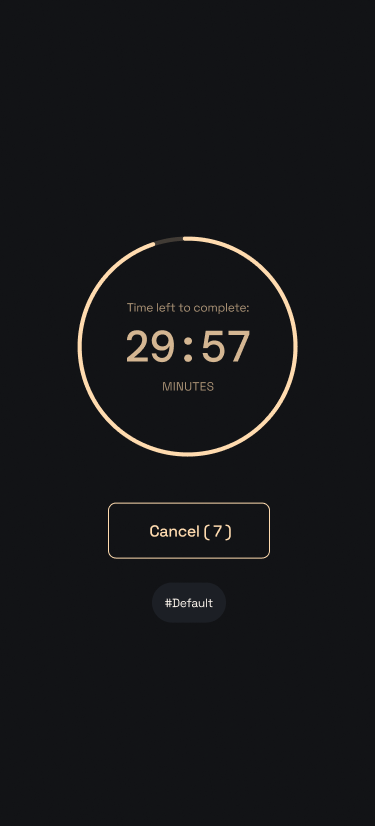
Finally start the session
6 · Finally, focus

This approach created several usability issues:

  • Too many steps before starting a timer
  • The focus timer was hidden behind multiple screens
  • Users had limited Ghost options
  • No clear indication when a Ghost had been selected
  • Navigation required excessive back and forth
After — cutting the path to a first session in half
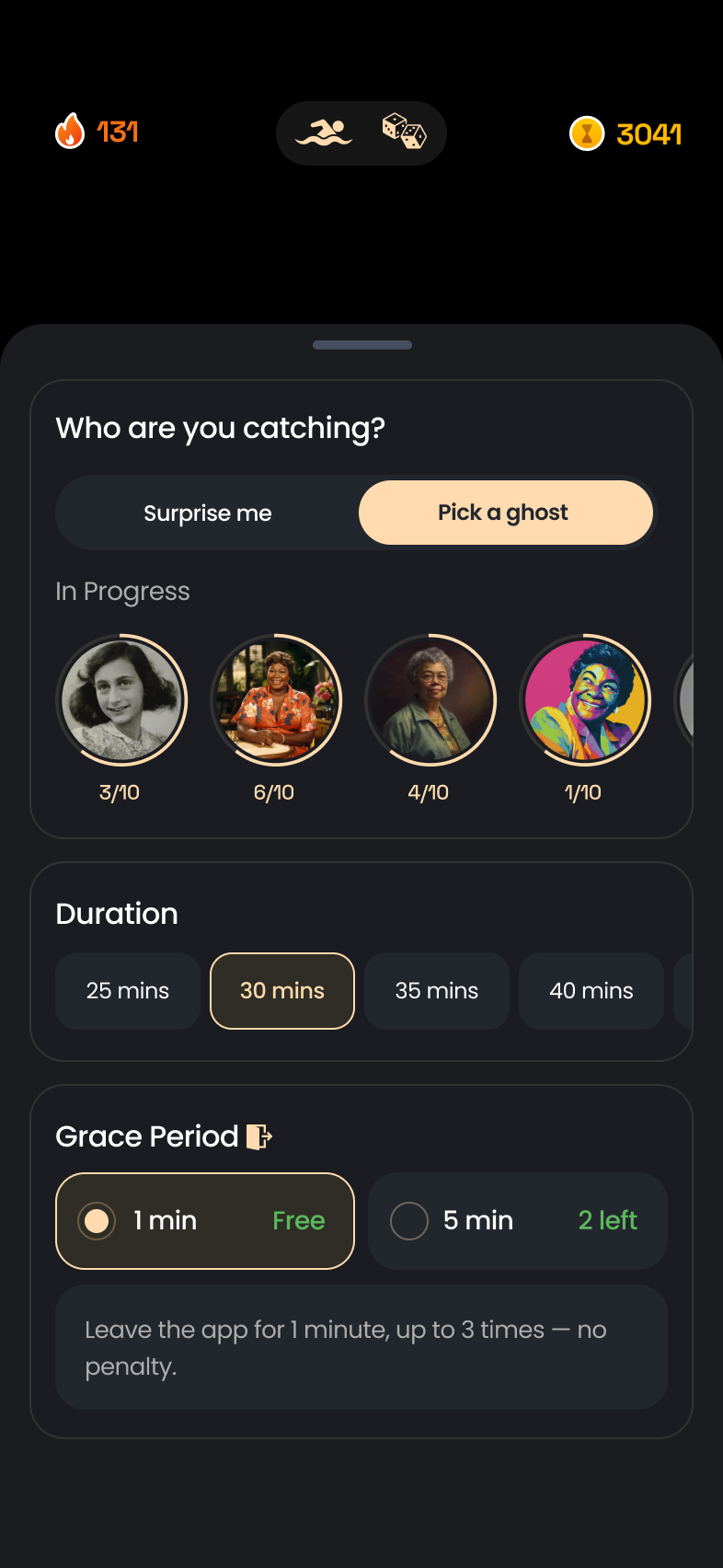
Pick a Ghost or Surprise me
1 · Pick a Ghost
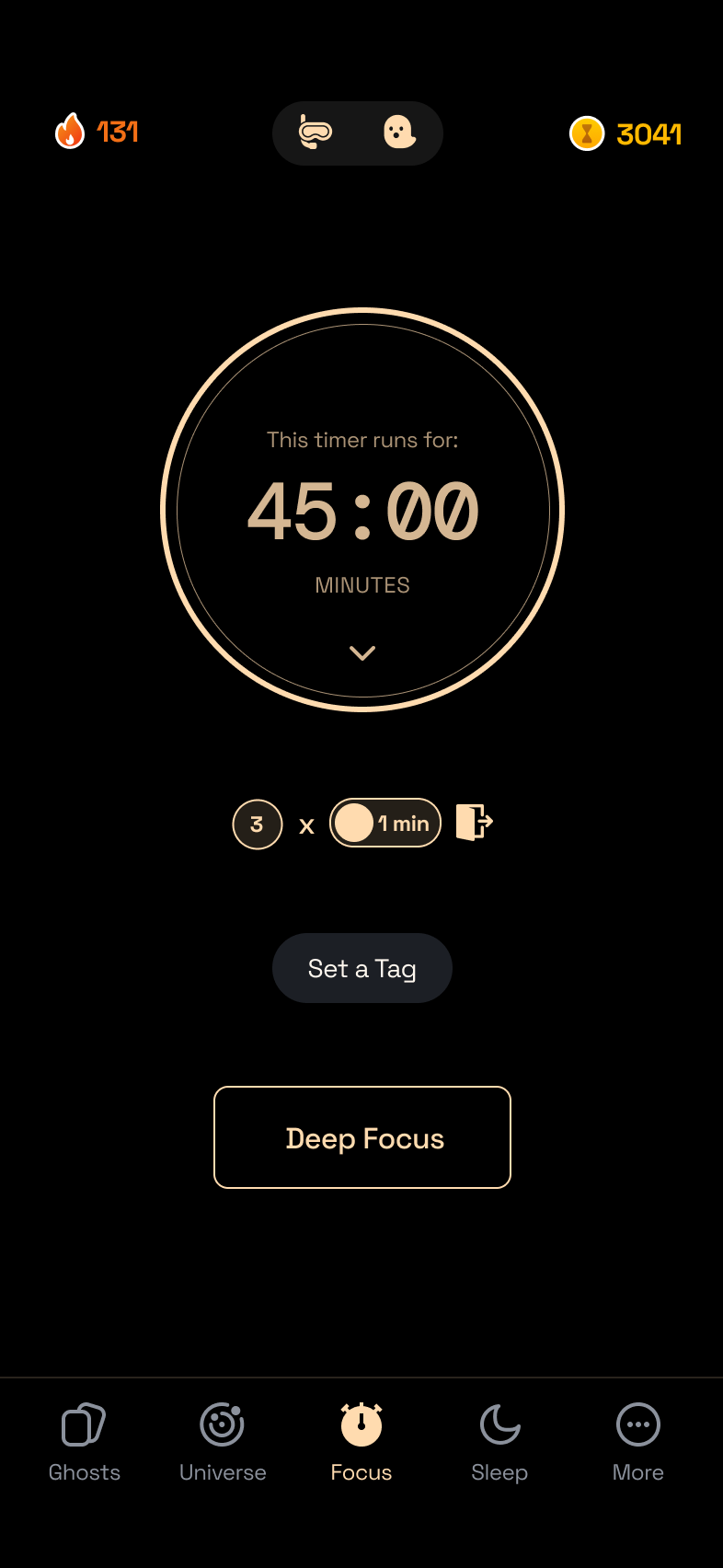
Timer front and centre
2 · Timer, front & centre
Focus session running
3 · Focus

Beyond the shorter path, I introduced clearer selection feedback, reorganized the Ghost page, reduced navigation complexity, and improved the discoverability of core actions, making the flow feel intentional rather than incidental.

From a fixed Starter Pack to mood-based recommendation

The original Starter Pack model gave users only a small set of Ghosts to choose from, this limited variety and reduced the excitement around discovery. To address this, we introduce mood-based discovery. This is a randomized way of selecting ghosts based on a user's mood.

Mood-based discovery
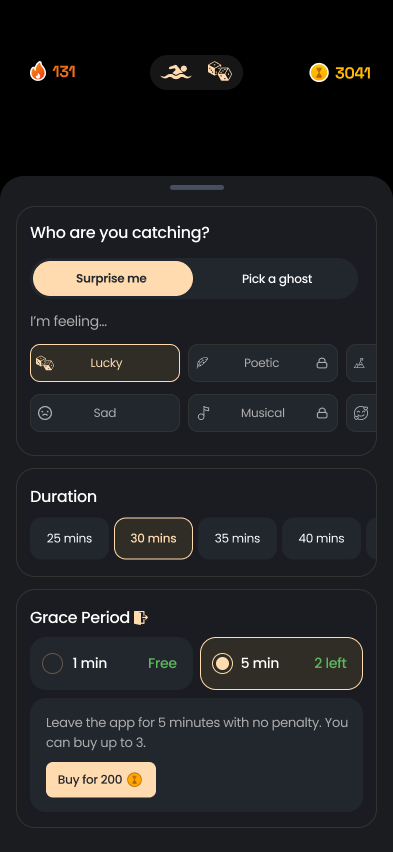
Mood-based Ghost discovery — I'm feeling...

Select a mood, receive a Ghost aligned with that feeling. Surprise without decision fatigue.

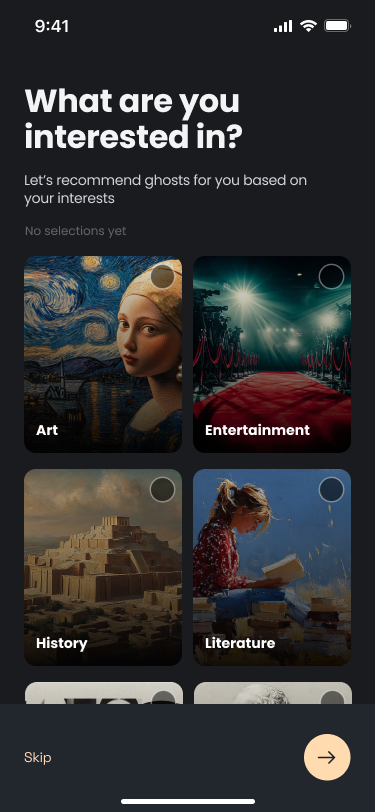
Interest-based discovery
Interest-based recommendations — what are you interested in?

Self-declared interests narrow recommendations and improve relevance.

Together, these systems created a more personalised experience while keeping discovery exciting.

The session was rigid

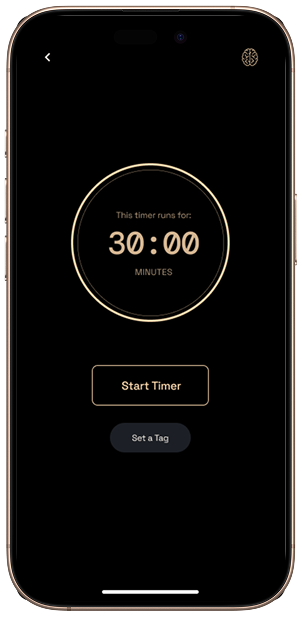
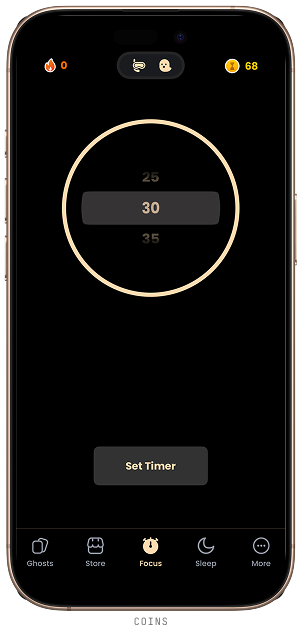
A fixed 30-minute timer didn't serve users with different tasks, energy levels, or schedules. One size never fits all.

Before
Fixed 30-minute timer, no flexibility

A fixed 30-minute timer, no flexibility.

After
Flexible timer from 25 to 120 minutes

A flexible timer, from 25 to 120 minutes.

From a paywall up front to value first

The original business model required users to pay upfront before experiencing the value of the product — creating a significant barrier to adoption.

  • Users did not fully understand the product before purchasing
  • Conversion rates suffered
  • Discovery was limited by the Starter Pack model

We moved the paywall to after the aha moment, shifting monetisation from access-based to convenience-based and letting users experience value before making purchasing decisions.

Before
Paywall
Onboarding
First session

Pay before you have any reason to.

After
Onboarding
First session & reveal
Optional paywall

Feel the value, then decide.

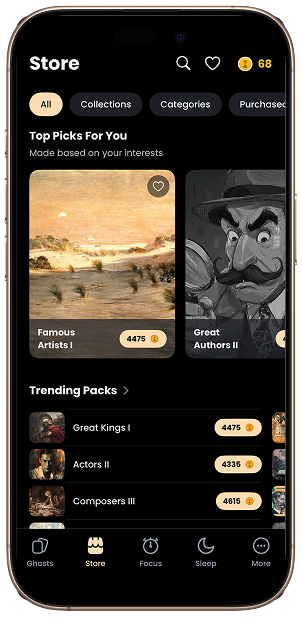
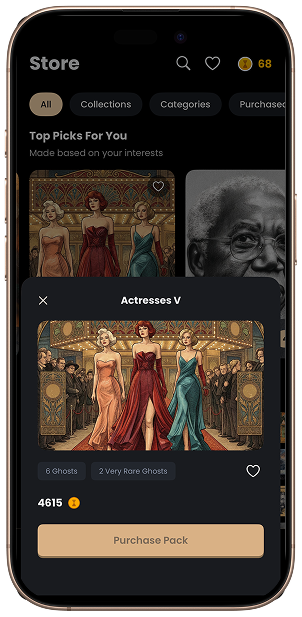
The product evolved toward a free-tier and subscription model. At the same time, the Store was redesigned to support optional progression — users could purchase Ghost Packs, unlock specific historical figures faster, and expand their collections.

Store — browse packs Store — pack detail and purchase

Four systems, one feedback loop

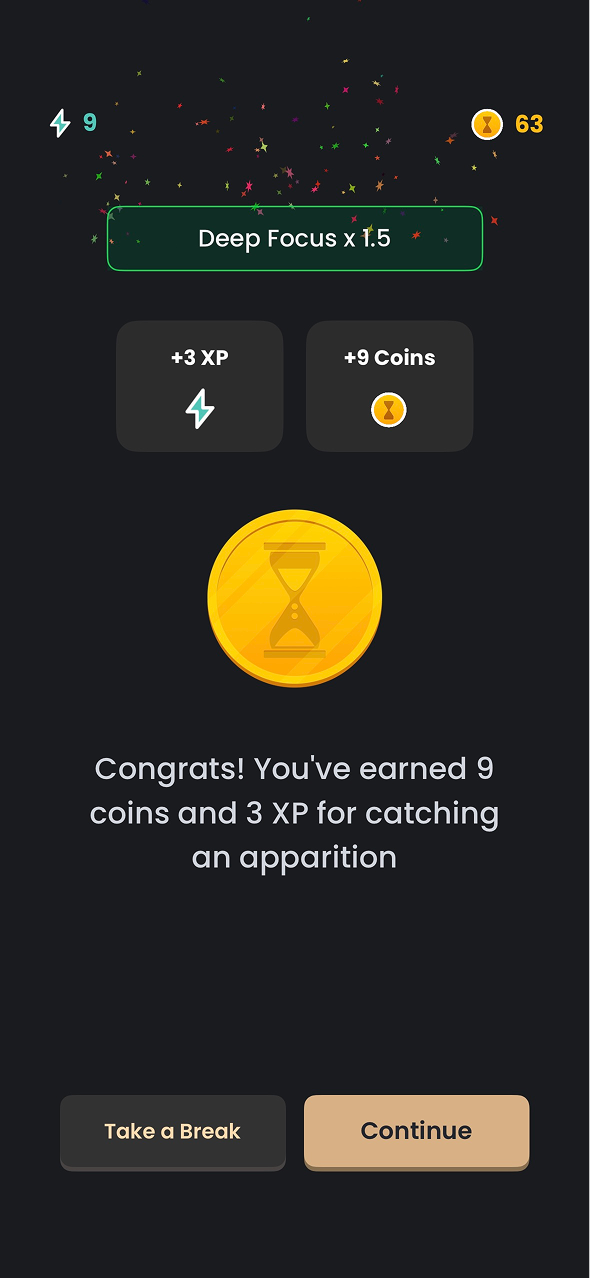
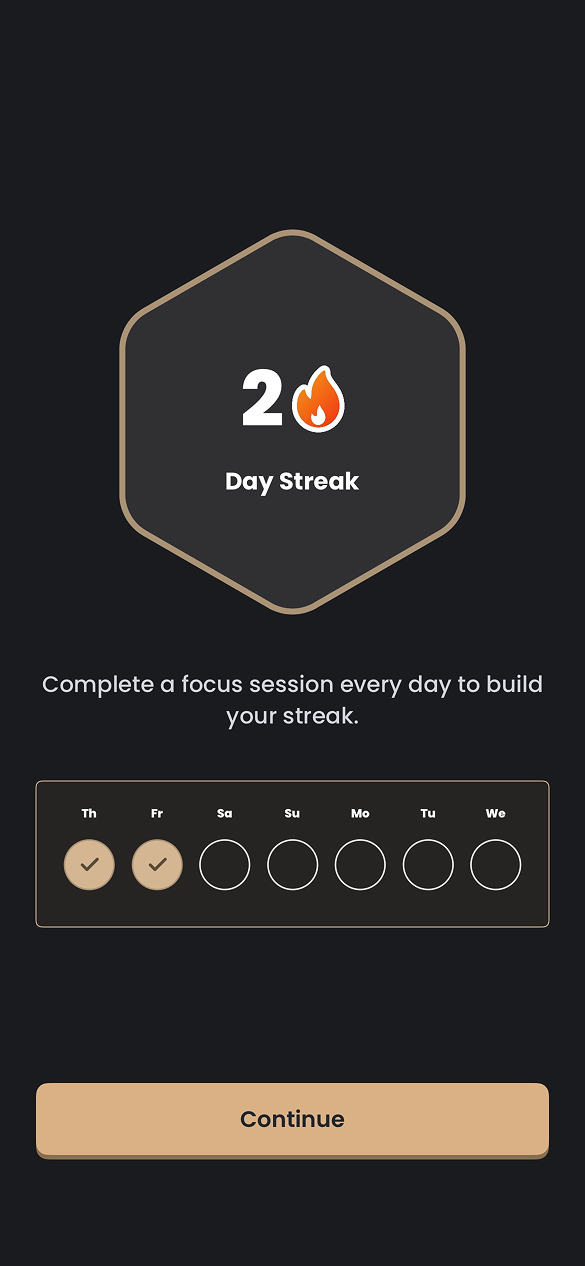
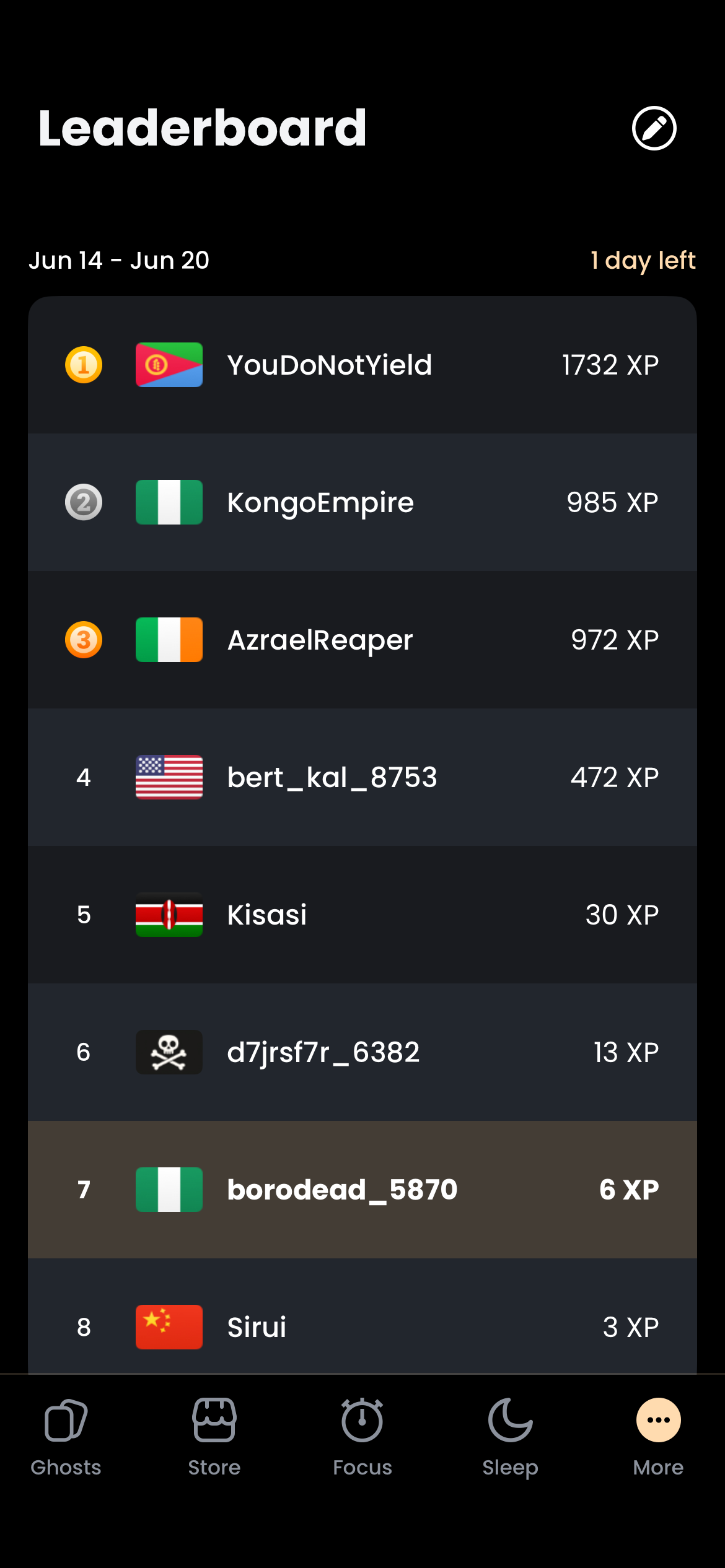
A single reward was not enough to encourage long-term engagement. To reinforce positive behaviour, I helped design multiple gamification systems that worked together — each addressing a different motivational pattern.

Coins reward screen

Coins

Real stakes — abandoning a session risks losing progress toward rewards users worked hard to earn, increasing commitment to completion.

Day streak screen

Streaks

Reward consistency, not intensity. Rather than focusing on individual sessions, the system promotes habit formation by rewarding daily return.

Leaderboard screen

Leaderboards

A social layer — users compare focus achievements with others, introducing friendly competition and increased motivation.

Universe progression map

Universe

A long-term progression system — follow paths toward Legendary Ghosts, the most famous historical figures in the product.

One product, three intentions

Not all focus sessions are the same. To support different contexts, the product included three focus modes — and in the process expanded from pure productivity into wellbeing.

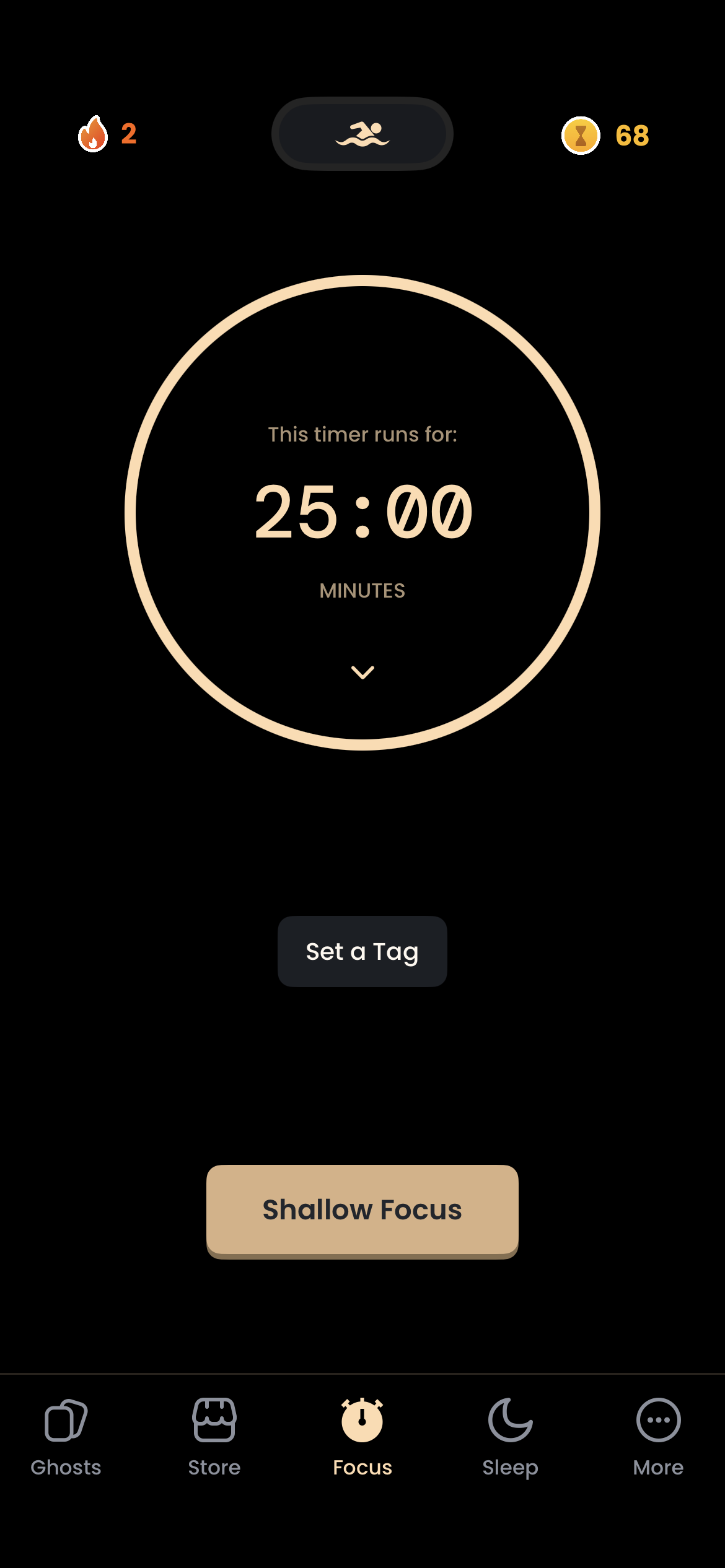
Shallow Focus mode

Shallow

For lighter tasks: email, administrative work, quick tasks.

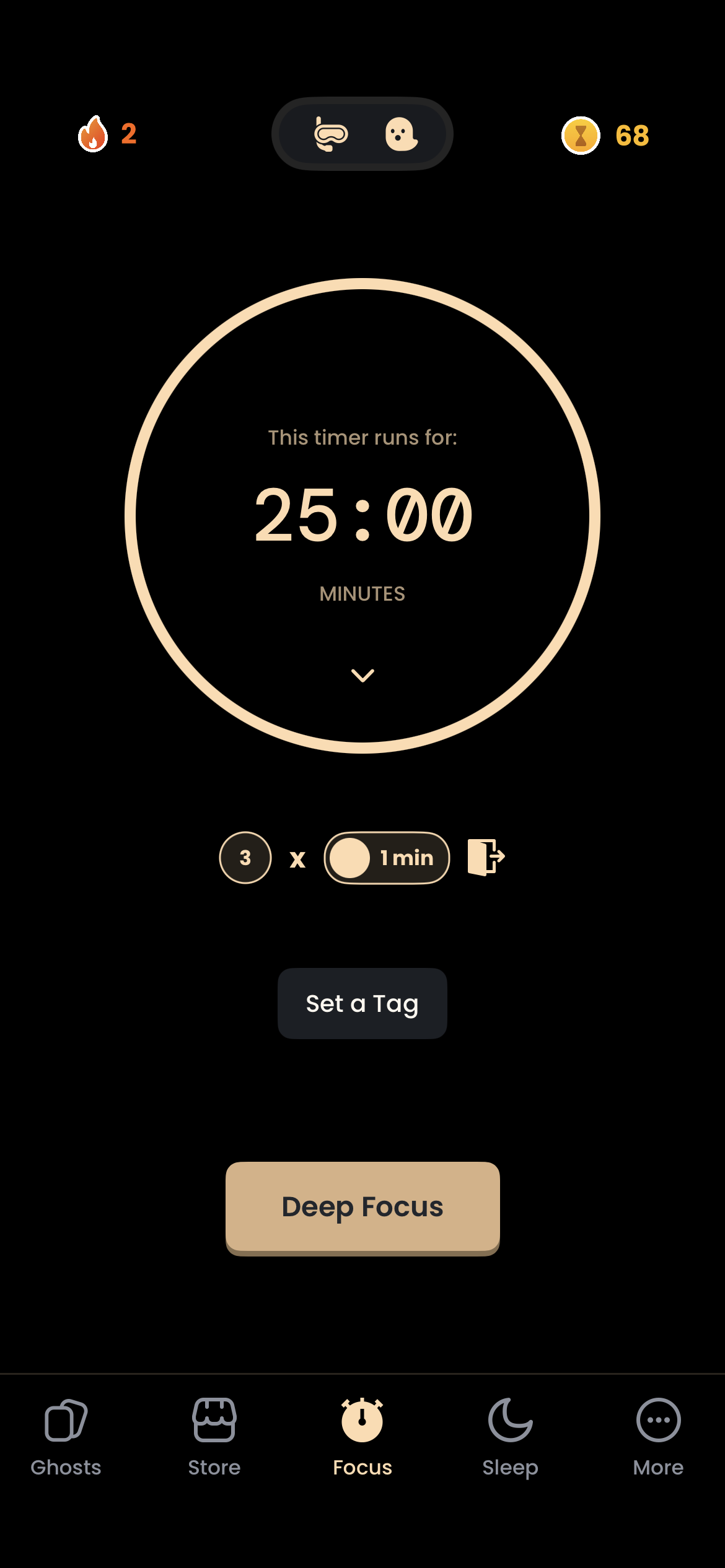
Deep Focus mode

Deep

For sustained concentration: writing, coding, studying.

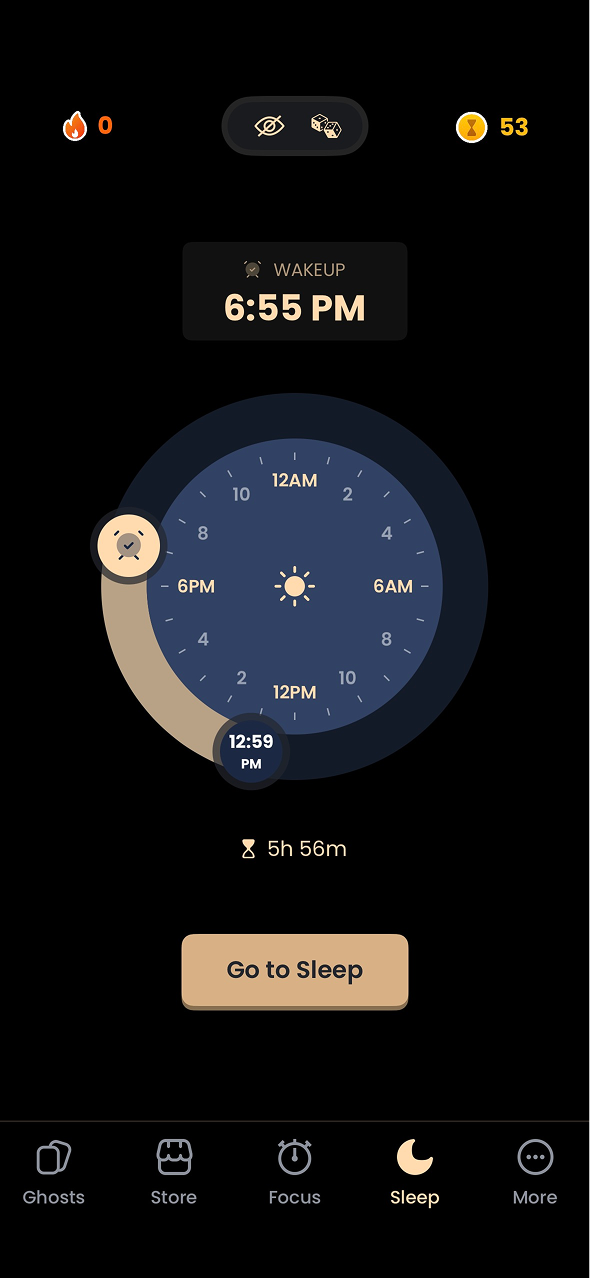
Sleep mode

Sleep

For users who want to disconnect from their devices and build healthier nighttime routines.

Reflection

Productivity products are motivation products.

Working on Catch the Ghost taught me that productivity products are ultimately motivation products. The most impactful design decisions were not about timers or settings — they were about reducing friction, creating meaningful rewards, and building systems that encouraged users to return.

Through multiple iterations, stakeholder collaboration, testing, and product evolution, I helped transform a traditional focus timer into an experience centred on discovery, progression, and habit formation.

Results — on the App Store
★★★★★

"Simple and effective UI."

★★★★★

"The timer and the catching apparitions concept is unique and well done."

★★★★★

"The only app I've found that FORCES you to lock in."

4.6★
App Store rating
92
Ratings
Live
Shipped on iOS
Contact

Let's build products people love to use.

If you have a new idea, a product to improve, or an interesting problem to solve, I'd love to hear about it.